University of Southern California USC Annenberg School for Communication USC Annenberg School for Communication USC East Asian Studies Center USC East Asian Studies Center GLOCOM
JMR logo big spacersearch
0
0 0 0
0 00 0
menu footer
0
0

Japan Media Review


LDP Leaders Shut Out Asahi

The leaders of Japan's ruling Liberal Democratic Party (LDP) will temporarily stop responding to inquiries from one of the party's strongest critics, The Asahi Shimbun newspaper, news reports said Tuesday.

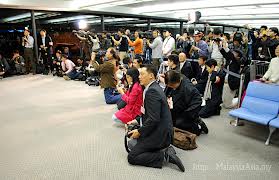
After a meeting Monday night of senior officials, LDP Secretary General Tsutomu Takebe told a press conference that LDP leaders will refrain from responding to Asahi Shimbun reporters, except at official press conferences. LDP members of Parliament had earlier decided to take the same action.

The decision comes in the wake of the publication of an article in the September issue of the Gekkan Gendai monthly magazine that allegedly contains detailed transcripts of The Asahi's interviews with two senior LDP officials and a former official with public broadcaster NHK. The interviews form the basis of an Asahi report, published in January, alleging that the two officials, former Deputy Chief Cabinet Secretary Shinzo Abe and former Economics and Industry Minister Shoichi Nakagawa, pressured NHK into censoring the content of a controversial 2001 documentary. (For background on the NHK censorship issue, see JMR's “Asahi Revisits NHK Censorship Allegations.”)

The LDP says the "boycott" will remain in effect until it learns how the documents were leaked.

In a notice to Asahi President Kotaro Akiyama (reported in greatest detail by the Mainichi Shimbun), the LDP said it strongly suspected that The Asahi itself was involved in the leak, as Gekkan Gendai had indicated it had obtained recordings proving the authenticity of the transcripts. Moreover, it said Asahi reporters had deceived NHK's Takeshi Matsuo, then executive director-general of broadcasting, by recording their conversation without permission. Furthermore, it claimed that Asahi's press conference last Friday, where it acknowledged that internal documents might have been leaked, was intended as a "stunt" meant to emphasize the fact that The Asahi had records of the disputed meetings, since it issued no apology and seemed to be on particularly good terms with the publisher of Gekkan Gendai, which had granted it permission to distribute copies of the article to reporters.

In response, The Asahi Shimbun said it has reason to believe there may have been a leak and is investigating. Nevertheless, it said allegations by the LDP that The Asahi Shimbun was itself a perpetrator of the leak and held the press conference as a stunt don't stand up to the facts. Therefore, it said, there's no need for LDP officials to turn down its reporters' queries. And it added that its reporters would not stop their newsgathering efforts.

The LDP action follows close on the heels of a major Asahi reassessment of its censorship allegations last week. Though The Asahi did indicate that it couldn't verify some aspects of its original story, it stuck by its conclusions and refused to issue a retraction. Needless to say, that invited immediate criticism from the LDP.

Commenting on his Web log, government critic Naoto Amaki claims that the LDP is merely trying to direct attention away from the censorship issue.

“Despite the fact that it's even clearer to everyone now that NHK officials revised the program due to political pressure (than when the Asahi first revealed it), a new debate is heating up in which the points of contention have again been diverted to questions like: Did MPs Abe and Nakagawa meet with NHK leaders or didn't they? Was the meeting before (the airing of the documentary) or after? Were the Asahi reporters' methods inappropriate? Were the conversations taped unethically? However, even those debates have been put to an end by the article in the September issue of Gekkan Gendai.”

That said, if it proves to be true that The Asahi's notes were leaked to the tabloid, it's apparently not all that uncommon.

According to Doshisha University Professor Takesato Watanabe writing in his 2004 book “A Public Betrayed, an Inside Look at Japanese Media Atrocities and Their Warnings to the West," "One common information-gathering method employed by weekly newsmagazines is simply to bribe press club reporters to 'leak' information from the clubs." He quotes Yasunori Okadome, editor of the now defunct scandal magazine "Uwasa no Shinso" as saying that some 30 to 40 percent of the articles in his magazine came from "information leaked by newspaper reporters who feel they cannot write about much of the information they have in their own publications."

0
Japan Media Review is a sister publication of Online Journalism Review.
© 2002-2006 Japan Media Review.