University of Southern California USC Annenberg School for Communication USC Annenberg School for Communication USC East Asian Studies Center USC East Asian Studies Center GLOCOM
JMR logo big spacersearch
0
0 0 0
0 00 0
menu footer
0
0

Japan Media Review


What They're Saying ... Journalist Yasuharu Dando on Blogging?s New Era

In a stinging indictment of the blogging world, journalist Yasuharu Dando, writing in his own Weblog " Current Topics ," condemned the recent actions of Japanese bloggers, whom he said were responsible for revealing the name of the Yomiuri Shimbun reporter censured for speaking out of line at a press conference (see JMR's recent piece, ? Yomiuri Apologizes over Reporter 'Manners' ?).

"As I realized that this was perhaps the first example of [blogs] having an impact on the real world, I thought to myself, if this is a symbol of the new era, it's just too pathetic. When they write the history books in the years to come and begin with this episode, let's hope they forgive us!" Dando wrote.

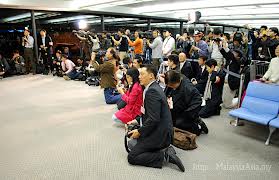
On May 13, the Yomiuri reprimanded one of its reporters covering the aftermath of the deadly train wreck in Amagasaki in western Japan, and banned him from attending future press conferences. He apparently yelled at the managers of the railway company during a late night press conference in early May, and his behavior triggered widespread complaints to the newspaper.

While the Yomiuri and the rest of the mainstream media did not reveal his name, it was subsequently uncovered on the Internet ? conduct that Dando said is reprehensible, especially by those bloggers who don't even reveal their own names.

Many bloggers in Japan write anonymously.

"When I started out as a cub reporter in a local bureau, most of the people I covered would only have direct contact with a newspaper reporter like me once in their lifetimes. I was told, 'How you write your story could affect that person's life.' Well, even minor blogs whose authors keep their identities anonymous have the same potential power," he said.

The shame connected with being exposed by the media can weigh particularly heavily in Japan. According to a document authored by The Liaison Committee on Human Rights and Mass Media Conduct (Jimporen), "The sense of shame and ostracism induced by the media is so potent, it can drive even innocent people to suicide. In 1988, for instance, a man in Gifu prefecture in central Japan hung himself soon after the dailies reported the police suspected him of 'killing' a friend; only later, after the forensic report was completed, was it discovered that the cause of death was a heart attack.?

Dando also defended the conduct of the Yomiuri reporter. "It would be difficult to restrain the behavior of reporters doing their job. First of all, getting new information ... is a good thing, and no reporting would get done if reporters had to wait until they finished debating the quality of the information they had received. In this case, no reporter would go home, docilely, just hearing whatever information West Japan Railway felt content to reveal at its own pace," Dando wrote. "Even I sometimes do things like threaten (my sources)," he confessed.

Citing the examples of U.S. bloggers forcing the resignation of Dan Rather at CBS and Eason Jordan at CNN, Dando said, ?Be forewarned. One day soon an event will take place that will make this incident look like a mere dress rehearsal. Just like in the United States, it may result in a victory over the mass media or public institutions, or may turn into a blog-triggered group indictment [of a person or institution]. One day, in the same way that we now condemn the trash coming out of the mass media, we may be saying the same thing about what's coming out of blogs.?

A science reporter for a nationwide newspaper (which he does not identify, as is common practice in Japan), Dando has been a netizen since joining "Science Net" in 1988, Japan's first public access PC network to be launched by a major media organization. He began his own column in an electronic newspaper in 1997 and now publishes "Current Topics," some pieces of which he translates into English under the title: " Japan Research and Analysis Through Internet Information .?

As of the afternoon of May 26, Dando's post had elicited 22 comments and 14 ?trackback? links to other Web sites citing his piece.

CORRECTION, 5/29/2005: The description of "Science Net" was modified to indicate that it was not Japan's first publicly available PC network, but the first to be launched by a major media corporation.

Comments:

From Zachary Emig on May 28, 2005 at 7:46 AM

There are several distinct issues here getting mixed into one.

MEDIA ACCOUNTABILITY
Overall, I think it's a good thing to have some outside fact checking of the mainstream media. This is especially true in Japan, where the traditional media outlets seem so restrained (in their coverage, and in their competitive zeal).

Yasuharu Dando's criticisms of this aspect are the typical reaction of mainstream media everywhere: how DARE you report on US?!?

QUESTIONING OF AUTHORITY
Very similar to the first issue, there's the problem (?) that Japanese culture is still quite hierarchical, and you're not supposed to question the "experts", i.e. here, your media overlords.

ANONYMOUS BLOGGING
Generally speaking, weblogs written anonymously (as mine is, for the time being) should be viewed more critically. But that is something for each reader to decide, not traditional media. In the blogging world, reputation is built by a record of credibility, not simply by the masthead at the top of your paper.

Anonymous writing has a long and respected tradition in the West, and I don't think one should criticize a blog for just that. Criticize it for getting the facts wrong, not for hiding its authorship.

PRINTING OF NAMES
It seems like it's a custom in Japan not to print the names of [suspected wrongdoers] in the newspapers. I don't know if this is a law or just a tradition. If it is the former, then it's understandable for the media to get upset by "outsiders" breaking the tradition. If it is the latter, than it is a matter for the police to follow up on.

...

Thanks to the Japan Media Review for pointing out this story! A lot is going on here.

0
Japan Media Review is a sister publication of Online Journalism Review.
© 2002-2006 Japan Media Review.